Dedicated endpoint
GPUs held for one workload.
Yours alone.
Dedicated Inference Endpoints
The single-tenant GPU platform for production LLM traffic, running your own weights or open models behind one OpenAI-compatible API, built for guaranteed throughput and predictable tail latency.
Same API. Hardware That Stays Yours.
GPUs held for one workload.
Yours alone.
No shared queue. No neighbor in your r99.
Weights stay resident for every hour held.
Availability and response terms, in writing.
Shared inference is priced per token because the capacity is shared. Yours is reserved.
Agents, voice, RAG at scale, regulated deployments.
Agents call in sequence, so the wait is the sum of every step. One warm endpoint for the whole fleet. No cold start mid-demo.
Voice breaks on variance, not on averages. Sessions stay open. Streaming on warm capacity, pinned to a single region.
Millions of queries a day, long context, tail latency that shows. Throughput bounded by hardware you hold, not by platform load.
Finance, healthcare, public sector. Procurement moves slower than the build. A deployment shape you can put in writing before anyone signs.
A shared tier costs less per token and more per incident.
You set the floor. Everything above it scales on demand.
The floor you reserve is the floor you get.
No platform ceiling on sustained calls.
Reserve an ordinary day, not your worst hour.
Spikes run on demand, billed as they occur.
Replica counts change without a redeploy or a new URL.
Overflow draws from the same region, so residency holds during a spike.
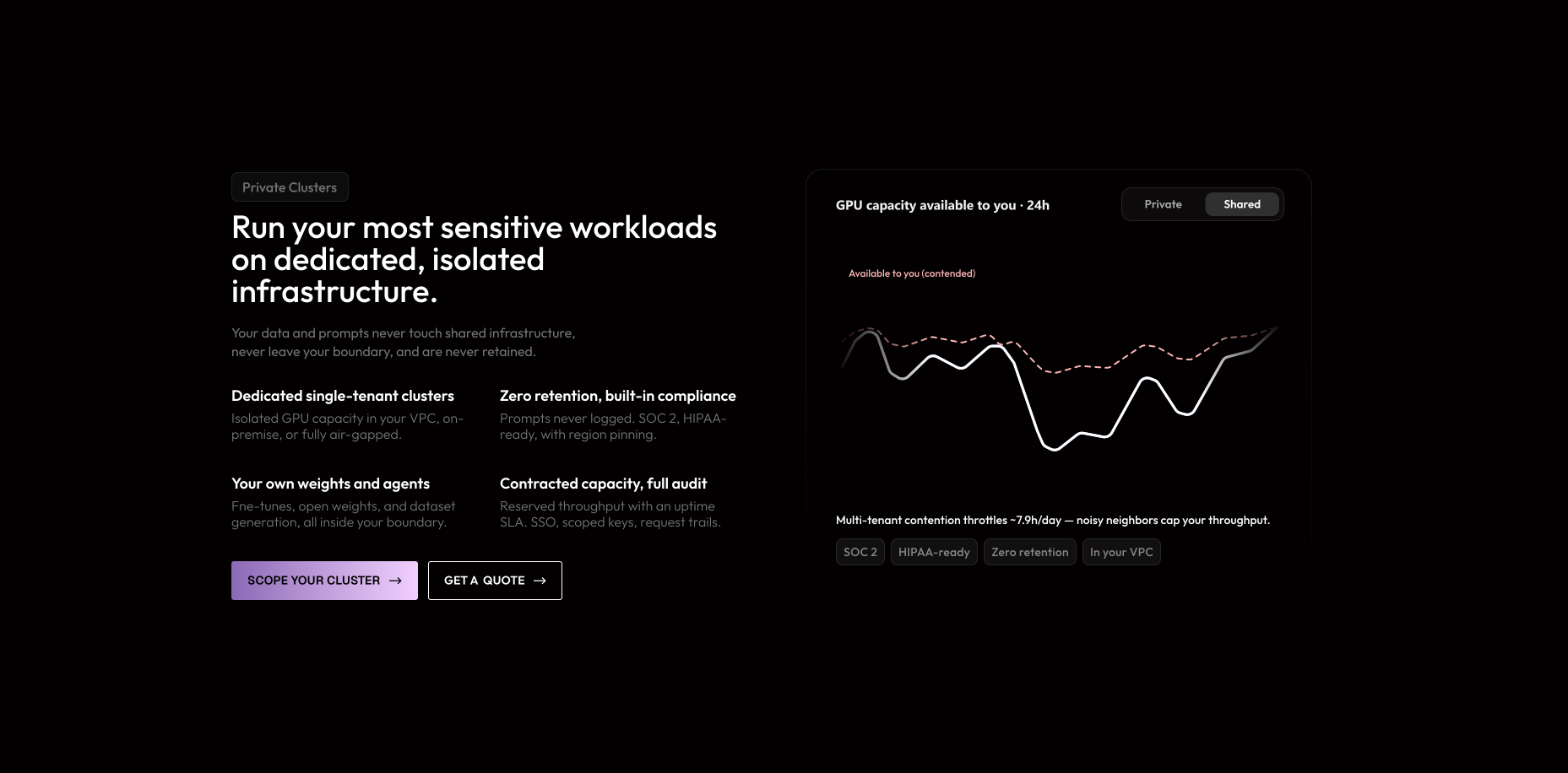
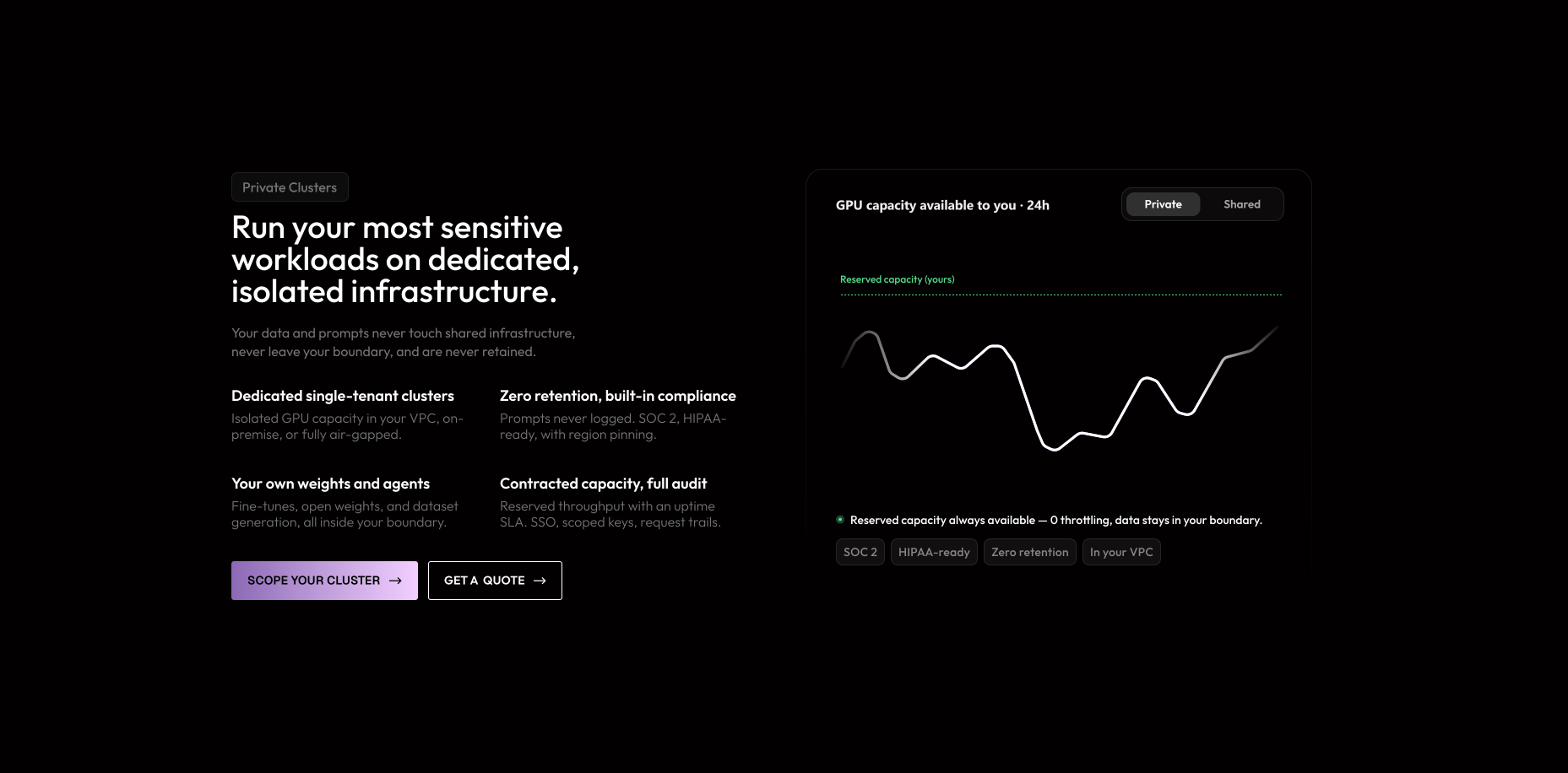
Fine-tunes, custom weights, and the serving stack to match.
Proprietary checkpoints in, a live endpoint out.
Your checkpoint, behind an OpenAI-compatible URL.
Open models on our hardware, not brokered out.
We run the serving stack. You get an endpoint.
GPU class chosen by memory and context length.
Long-tail models get the same runtime work as the popular ones.
Language, reasoning, code, embeddings, speech, vision.
Every model here runs on Inferel hardware, not brokered out to someone else's.
The more of the reservation you use, the less each token costs.
Crossover utilisation = Reserved cost ÷
(capacity in millions × your per-token price)
Two inputs you cannot estimate. The hourly rate, and sustained tokens per second for your model on the hardware you would hold. We measure both in the pilot.
TALK TO SALES →Pick by the shape of your traffic.
Reserve hardware around the load you already sustain.
Start per token and move when usage becomes predictable.
Regions, tenancy, retention, and the paperwork behind them.
US and APAC. Inference stays in the region you pick, overflow included.
Security documentation is available during customer review.
Configured per deployment, including no storage, no logs, no training.
A private, single-tenant deployment where reserved GPUs serve only your workload through an OpenAI-compatible endpoint.
Serverless capacity is shared and billed per token. Dedicated capacity is held for you, keeping weights warm and throughput predictable.
It usually wins when your sustained usage crosses the reservation’s utilisation threshold. We calculate that crossover with your model during the pilot.
Yes. Inferel can deploy proprietary or fine-tuned checkpoints and expose them behind the same API used by the model catalog.
Language, reasoning, code, embedding, speech, and vision models can be matched to hardware according to memory and context needs.
Your reserved capacity has no platform rate limit. The physical throughput of the hardware becomes the available floor.
Overflow can burst into pooled capacity in the same region and is billed on demand while your reserved floor remains available.
The GPU class is selected from model memory, context length, latency, and sustained throughput targets.
Inferel operates capacity in the United States and APAC. Exact regional availability is confirmed during sizing.
The service combines owned capacity, a tuned runtime, an OpenAI-compatible API, and contracted operating terms in one deployment.
Usually only the base URL and credentials change. Existing OpenAI-compatible clients can continue using their current request schema.
Scope, measure, pilot, size. Then the reservation fits.